
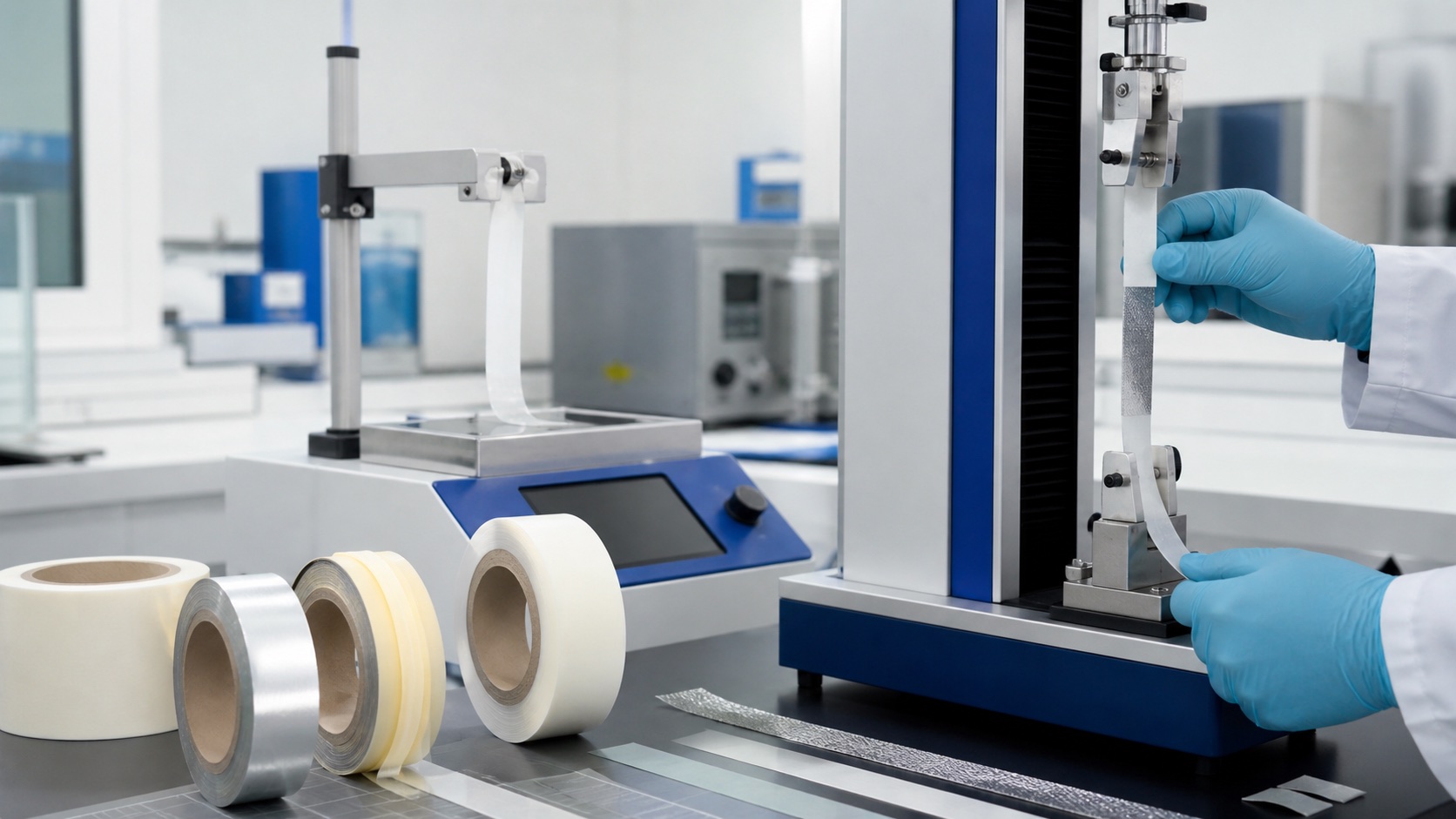
Illustration note: The header image is an AI-generated concept illustration. It is not a photograph of Haoxuan’s actual laboratory or evidence of product testing.
A label-stock sample request should describe both the printing process and the surface that will receive the finished label. Send the printer reference, ribbon or ink system, material construction, roll format and intended container together. Asking only for “printable labels” leaves too many variables unresolved for a meaningful compatibility review.
Haoxuan lists Thermal Transfer Paper for ribbon-based printing and Clear PET label material with clear PET facestock, emulsion adhesive and white glassine liner. These are two different catalog starting points. Neither listing establishes that every printer, ribbon, ink or container combination will work. The following brief helps buyers request a sample that addresses their actual process.
Start with the printer and printing method
Give the printer manufacturer, model and printing technology. Include the manual’s relevant media requirements or a verified specification extract where available. State whether printing happens on the final label shape or on material that will be converted afterward. Identify any downstream cutting, dispensing or application equipment that the material must pass through.
Do not infer compatibility from the word “thermal.” Haoxuan’s thermal transfer listing describes a process that uses a ribbon. A printer or material described as direct thermal involves a different question. If the equipment or consumable type is uncertain, confirm it before ordering samples rather than asking the supplier to guess from a photograph of a printed label.
Identify the ribbon or ink, not just the color
Provide the consumable manufacturer and exact reference, along with the supplier’s compatibility information. For a ribbon-based process, identify the ribbon construction or grade where known. For an ink-based process, name the ink system and any treatment or curing requirements specified by the equipment and material suppliers.
Explain whether the consumable is fixed by your existing production process or can be reviewed as part of the trial. Changing the material and the ribbon at the same time can make an improved result difficult to interpret. Label each tested combination separately and record the approved machine settings without exceeding the equipment manufacturer’s limits.
Separate facestock from adhesive and liner
The printable face is only one part of a self-adhesive label construction. Ask the supplier to identify the facestock, any relevant print-receptive treatment, adhesive and release liner for the exact proposal. Record whether you require raw facestock, adhesive-coated material or finished converted labels; these are not interchangeable purchasing units.
This distinction matters for the thermal transfer paper listing: its displayed S90 specification line states “No Adhesive.” Do not silently turn that line into a promise of finished self-adhesive labels. If the project needs an adhesive-backed construction, request its separate confirmation. Likewise, clear PET’s listed construction does not by itself establish a compatible printing process for your equipment.
Provide a dimensioned roll or sheet brief
Use the printer and converting-equipment requirements to specify the requested format. Record label or web width, relevant length, core, roll limits and winding direction where applicable. If labels are already cut, describe the shape, pitch, gap or detection mark required by the actual equipment. Include a drawing when words could leave the direction ambiguous.
Distinguish required dimensions from values you are asking the supplier to recommend. Do not copy a roll format from another printer or assume that a catalog photograph shows the supplied format. A material can print acceptably while an incompatible roll or detection arrangement prevents reliable feeding through the intended line.
Describe what the print must communicate
Supply representative artwork, including the smallest text, barcode or QR code and any variable information. Identify the scanner or verification requirement where the application needs machine-readable information. A clear-looking image on a screen is not evidence that the printed code meets the buyer’s acceptance requirement.
State the intended handling and exposure of the printed label. Explain which observations matter, such as readability after the agreed handling sequence, while leaving performance limits to the documented requirement and agreed method. Do not invent resistance ratings or assume that one successful sample proves all moisture, abrasion or chemical-exposure claims.
Include the real application surface
Send a container or panel reference, material and surface finish. Describe curvature, cleanliness and any coating relevant to adhesion. Record whether application occurs before or after filling, cooling or another process step. When a physical sample cannot be supplied, provide dimensions and photographs while acknowledging what the supplier cannot assess remotely.
Separate printing acceptance from application acceptance. A printed label may be readable yet unsuitable for the intended surface or handling. Conversely, an adhesive may hold while the print does not meet the required result. Use distinct observations so that a supplier can investigate the correct part of the construction.
Make the sample brief easy to answer
- Project reference and intended label use
- Printer model, method and media requirements
- Ribbon or ink manufacturer and reference
- Candidate product link and required construction
- Roll or sheet drawing and feeding requirements
- Representative artwork and readability requirement
- Application surface, dimensions and condition
- Expected exposure and agreed trial observations
- Requested sample format and open technical questions
- Planned order quantity, destination and commercial questions
Ask the supplier to mark each field as confirmed, requiring more information or subject to a trial. Keep the reply with a revision number. This prevents an unanswered requirement from becoming an assumed feature when purchasing later compares quotations.
Record the trial as a complete combination
Give each sample a code and record the printer, consumable, material and settings used. Retain the printed sample and relevant images. If a jam, unreadable code or visible print defect occurs, record its circumstances before deciding which component caused it. Ask the responsible technician and supplier to review a controlled change rather than making several unrecorded adjustments.
Approve only the combination and use conditions supported by the evidence. Before ordering, ensure the quotation identifies the tested construction and required format. Sample approval does not settle price, availability or delivery terms. Use Haoxuan’s inquiry page to send the completed brief and request a construction-specific review for your printer and application.