
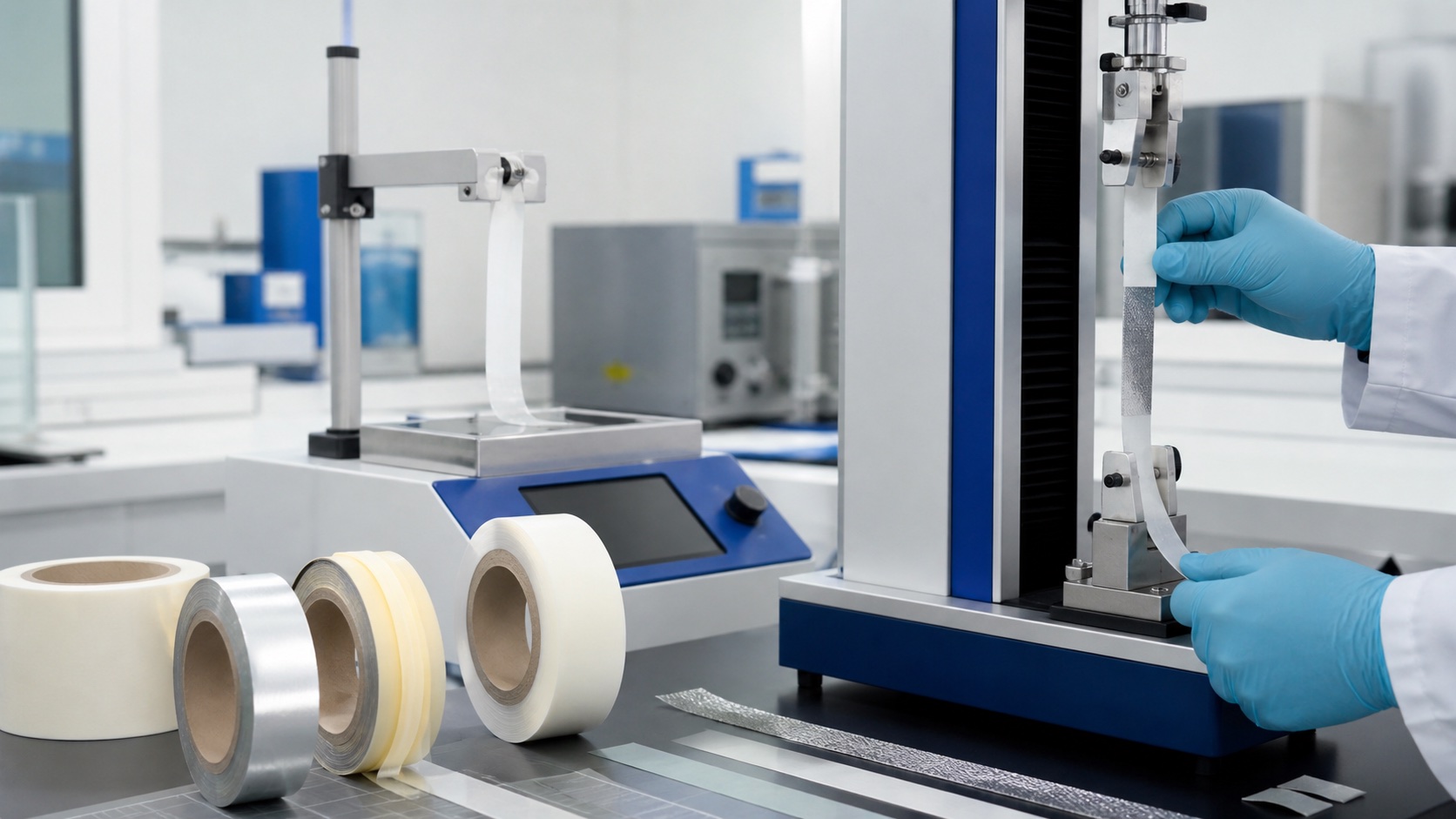
Release liner materials should be specified as a system
Buyers often begin a release liner inquiry with a short request such as “silicone release paper” or “liner for adhesive tape.” That description may be enough for an initial conversation, but it is rarely enough for a reliable sample comparison. A release liner is selected together with the adhesive, the face material, the converting process and the final application.
The right material brief therefore needs to describe more than the liner’s name. It should identify the liner face, backing, release coating, dimensions, converting method and operating conditions that matter to the finished product. This gives a manufacturer a clearer basis for recommending a structure and preparing an RFQ.
For an overview of the materials and product categories available from Haoxuan, buyers can start with the Products section and then use the Contact page to send application details.
1. Define what the liner must release from
The first question is not simply “which liner is cheapest?” It is “what adhesive or coating must separate from the liner, and at what stage?” A liner used with a pressure-sensitive adhesive may have different requirements from one used for a transfer adhesive, label stock, die-cut part or laminated construction.
Describe the material that will contact the release surface. Useful information can include adhesive family, coating method, whether the adhesive is solvent-based, water-based or hot-melt, and whether the liner will be removed by hand or by an automated process. If the exact chemistry is confidential, a buyer can still provide a neutral description of the adhesive behavior and the intended converting route.
This information helps the supplier evaluate whether the release surface is compatible with the adhesive and whether the release level should be discussed as a starting point for sampling rather than treated as a universal value.
2. Confirm the liner face and backing structure
Release liner materials can use different face and backing structures depending on the balance required between release performance, stiffness, printability, dimensional behavior and converting needs. The buyer should confirm whether the project requires paper, film or another specified substrate, and whether the liner will be used as a temporary carrier, a die-cut component or part of a laminated product.
For paper-based constructions, the grade, caliper range and surface finish can affect handling and converting. For film-based constructions, the polymer family, thickness range and dimensional behavior may be important. These are project variables, not universal claims; the correct choice depends on the final construction and process.
Also clarify which side is coated. A single-sided liner and a double-sided liner can serve very different designs. If the finished product uses multiple release surfaces, state the intended unwind direction and which side must contact the adhesive.
For a paper-based example, review Haoxuan’s siliconized glassine paper and the release liner selection guide. Confirm the liner construction and test it with the intended adhesive before approving a sample.
3. Discuss release level instead of using a vague “easy release” label
“Easy release” can mean different things to different teams. A converter may need a liner that separates cleanly at a particular peel speed, while an end user may prioritize stable handling during storage and application. A buyer should describe the desired behavior in process terms wherever possible.
- Is the liner removed manually or at a defined machine speed?
- Does the adhesive need to remain on the product after separation?
- Is low initial release, controlled release or a more secure hold preferred during converting?
- Will the liner be removed immediately, or after storage and transport?
- Are there any visible transfer, curl or edge-lifting concerns in the finished construction?
If the project has an internal test method, share the method and acceptance criteria with the supplier. If it does not, request a sample plan that explains what will be compared. A sample should be evaluated in the real adhesive and product construction whenever possible, because liner behavior cannot be judged reliably from the liner alone.
4. Give dimensions and converting information early
Width, length, roll format and core requirements are practical details that can change whether a material is suitable for production. Include the target web width, roll diameter or length, core size, winding direction and any slitting or sheeting requirements that are already known.
The supplier should also know whether the liner will be slit, laminated, die-cut, printed, sheeted or supplied as a roll for a later converting step. Edge quality, winding consistency and handling requirements may matter more than a general material description when the liner enters a high-speed or narrow-web process.
If the final product has a registered pattern, narrow parts or tight die-cut tolerances, state that during the inquiry. It is better to identify those constraints before sampling than to compare a material under conditions that do not represent production.
5. Describe storage and application conditions
Release liner materials are exposed to the conditions of the finished product and the buyer’s supply chain. Provide the expected storage environment, approximate temperature and humidity range if known, transport conditions and intended service environment. Also identify whether the liner will be exposed to heat, moisture, outdoor conditions, chemicals or repeated handling.
These details do not automatically determine one material specification, but they help the supplier identify which variables require testing. They also prevent a sample from being approved only on a short bench test while important storage or application conditions remain undefined.
6. Ask for a sample package that can be compared objectively
A useful sample package should include the material description, dimensions, roll or sheet format, intended release-side orientation and any available technical information that the supplier can verify. Buyers should record the adhesive, substrate, lamination or coating process, test conditions and observations for each sample.
Avoid comparing samples only by touch or by a single peel impression. A structured comparison can include unwind behavior, liner removal, adhesive transfer, edge condition, curl, die-cut handling and performance after the planned storage interval. The exact tests should be agreed by the buyer and supplier according to the application.
7. Build the RFQ around decisions the supplier can answer
An effective release liner RFQ can be concise while still covering the decisions that affect material selection:
- End product and application.
- Adhesive or coating type and the material it contacts.
- Required liner face and backing preference.
- Single-sided or double-sided release surface.
- Target width, length, roll, sheet and core format.
- Converting process, including slitting, laminating, sheeting or die cutting.
- Release behavior to compare and the buyer’s test method, if available.
- Storage and service conditions.
- Sample quantity, development stage and target production timing.
- Packaging, documentation and commercial questions that require confirmation.
The more clearly these points are separated, the easier it is to distinguish a material-selection question from a commercial question. It also gives both sides a record of what the sample is intended to prove.
Conclusion: sample the construction, not just the liner
Release liner materials should be evaluated as part of the complete adhesive and converting system. Start with the adhesive contact surface, then define the liner structure, release behavior, dimensions, process and conditions that the finished product must handle. This creates a clearer technical brief, reduces avoidable sample cycles and gives the supplier a more useful basis for an RFQ.
For the next step, send the application, adhesive type, target format and converting process through Haoxuan’s Contact page. If you are still comparing material options, review the site’s Products section first so the inquiry can be matched to the relevant product category.