
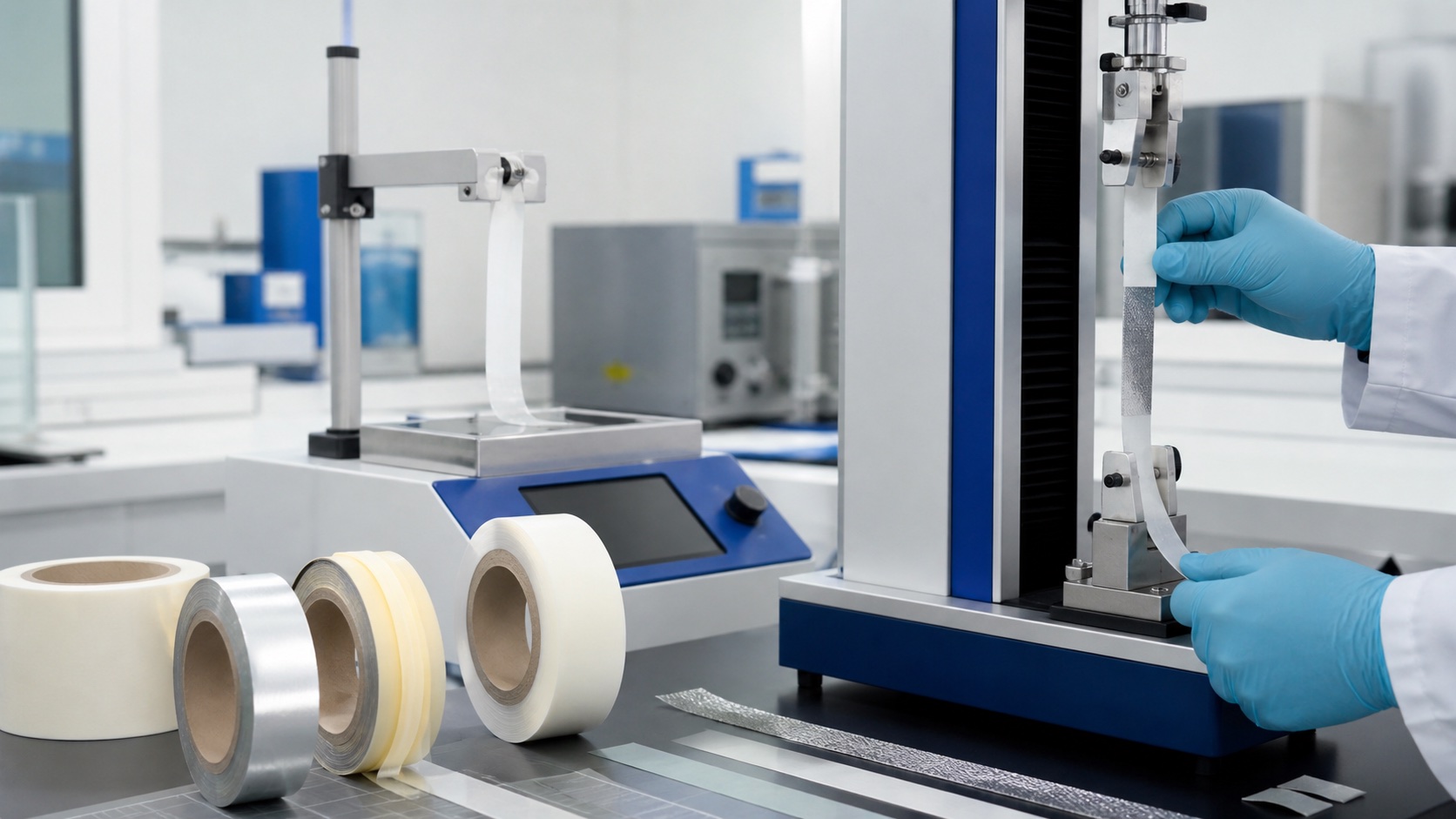
A linerless lamination roll should not be approved as a drop-in replacement merely because its width matches the current roll. First establish what happens to each surface between unwinding and the finished graphic. The useful comparison is a material-path review with the equipment owner, not an assumption that removing a release liner leaves every other process requirement unchanged.
Start with the product construction that is actually described
Haoxuan’s Linerless PVC Cold Lamination Film page identifies a PVC film with acrylic water-based or solvent adhesive and no liner. This supports a narrow product distinction: the proposed construction does not include a separate release liner to remove. It does not establish the precise adhesive option in a quotation, suitability for a particular machine, or the result on a buyer’s printed substrate.
Ask the quotation to identify the actual film and adhesive specification offered, rather than carrying every option from the catalog into one assumed construction. Record the intended roll width, length and core details as requested requirements, with supplier confirmation alongside them. A catalog option is a starting point for that discussion, not proof that every combination is available or approved.
Describe the current path without changing the machine
For the existing lined material, ask the process owner to identify the unwind, the point at which the liner separates, the liner’s take-up or collection destination, and the point at which film meets the printed work. A simple written sequence is enough to expose an incomplete comparison. It need not be a technical drawing, and it should not imply that anyone has approved a machine alteration.
Then describe the proposed linerless path separately. Which roll is supplied? Which side is presented towards the print? At which stage does a surface become exposed? Which parts of the existing description no longer apply because there is no separate liner? Questions about routing, tension, rollers, guarding and operating settings belong with the qualified equipment or process owner. This guide supplies no settings and no instruction to bypass a station.
Separate a missing liner from a proven process benefit
The absence of a liner establishes that there is no liner sheet from this construction to collect at separation. It does not quantify total material savings, labour reduction, throughput, waste or finished quality in a particular operation. Those conclusions require the actual comparison, including rejected work and any additional handling.
Avoid presenting the existing liner take-up operation as automatically unnecessary equipment. A machine may have other uses or requirements, and the proposed route has not been assessed merely because the product name says linerless. Keep “construction difference” and “approved production consequence” in separate fields. This allows purchasing to discuss an option without promising a factory-wide productivity improvement that no trial has measured.
Make a surface-contact map for the review
A compact review record can have four columns: stage, surface presented, intended contact and unresolved question. For the unwind stage, record only what the supplier’s roll identification and the equipment owner’s review establish. For the joining stage, identify the printed substrate and the surface intended to receive the film. For collection or finishing, identify what leaves the process.
Do not infer release behaviour, blocking resistance or clean unwinding from the lack of a liner. If those properties matter to the buyer’s operation, request relevant specifications or an agreed evaluation. Likewise, a photo of a clear film roll cannot establish which side carries adhesive or which orientation has been approved. A labeled sample and a written identification are more useful than an unlabeled stock photograph.
Keep the printed work constant in a meaningful comparison
The intended printed material is part of the evaluation, not background information. Identify the substrate, print process, ink system and actual finishing route supplied to the evaluator. A comparison made on a different print stock may answer a different question. Record any differences rather than attributing all observed changes to the presence or absence of a liner.
For a proposed sample review, agree what will be examined: appearance, visible defects, handling observations and the finished construction relevant to the application. Do not replace a specific acceptance discussion with the phrase “same quality.” If a numerical test or durability requirement is needed, the parties should identify its method and acceptance basis separately; none is supplied by this general workflow discussion.
Track a trial as evidence, not as an automatic approval
Label sample rolls and finished specimens so an observation can be traced to the offered material. Record who reviewed the route, which machine or process was used, what printed work was involved and whether the trial represented the intended production arrangement. A result from an informal hand sample should not silently become approval for an automatic line.
If an issue occurs, retain its location in the process description. A mark seen before joining, a defect first visible after joining and a concern arising during later finishing are different observations. This does not diagnose their cause. It prevents a purchasing discussion from collapsing several distinct stages into an unsupported statement that the film either “works” or “does not work.”
Use a substitution decision with clear limits
A useful decision can be “construction identified, equipment review pending,” “sample agreed for a named application,” or “approved for the recorded specification and route.” These are not interchangeable statuses. List unresolved items next to the decision, including any missing roll identification, application details or acceptance evidence.
Changing a material name in a purchase order before those boundaries are clear can obscure what was actually reviewed. Keep the previous material reference and the proposed replacement reference together until the parties agree the supply scope. Approval of one printed application does not establish suitability for every graphic, mounting surface or environment handled by the buyer.
Request the information needed for a bounded proposal
Send the current material reference, proposed linerless product, printed substrate, roll requirements and a description of the intended process through the Haoxuan contact page. Include the questions the equipment owner needs answered and the sample acceptance points still open.
The aim is a traceable substitution review: a defined construction, a reviewed path and evidence from the relevant application. It is not a promise of cost reduction, machine compatibility, operating safety or service life. Keep those outcomes unconfirmed until the appropriate specification and evaluation support them.