
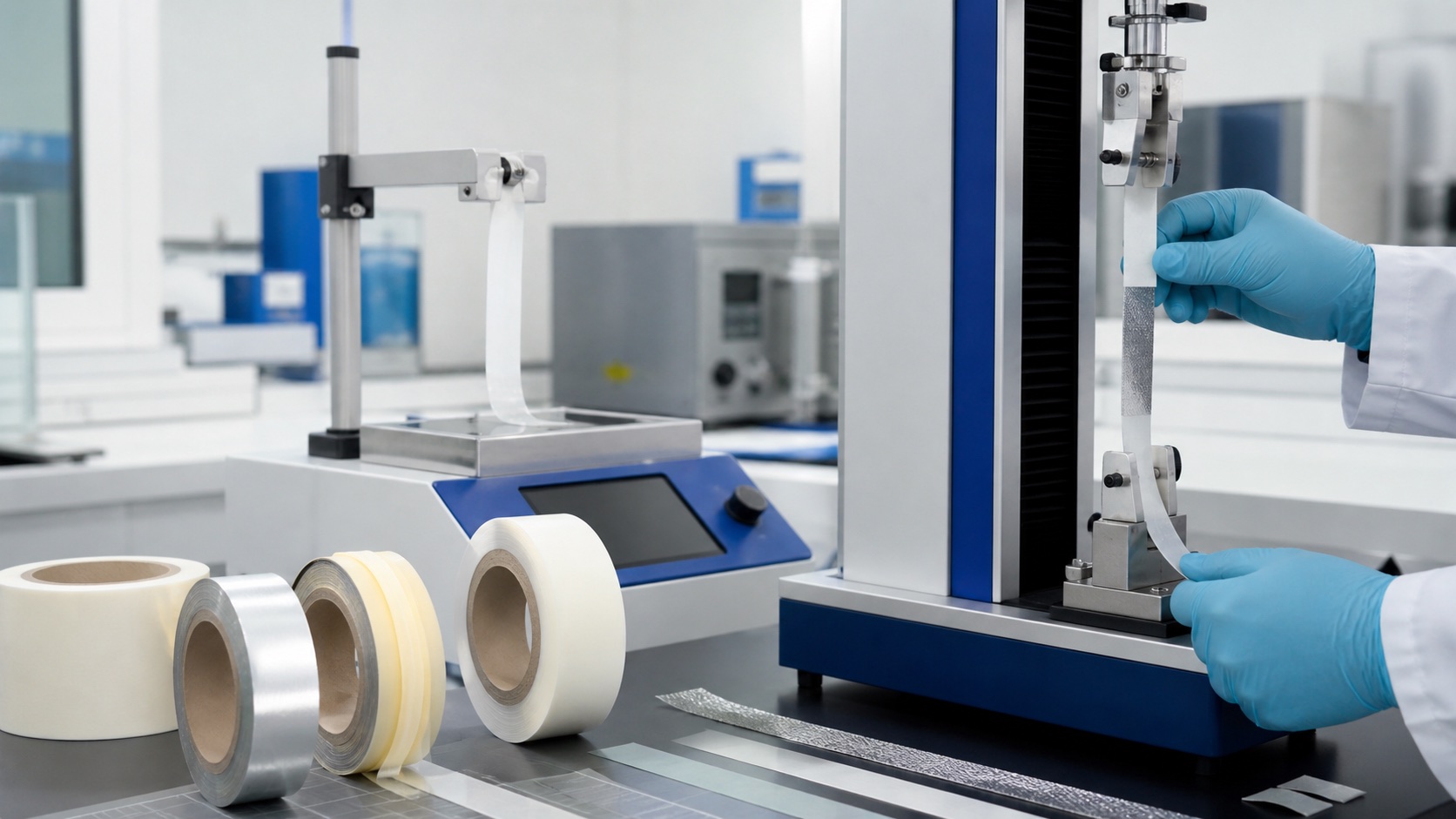
Illustration note: The header image is an AI-generated concept illustration. It is not a photograph of Haoxuan’s actual laboratory or evidence of product testing.
Evaluate temporary protection film on the actual surface finish and through the intended use period before approving a bulk purchase. A practical removal-trial record connects the film sample, substrate, application, dwell conditions and removal observations. It should show what was tested, what remains unknown and which conditions the purchasing decision covers.
Haoxuan’s Hard Floor Protection Film and Stainless Steel Protection Film listings address different surface-protection contexts. The product names help identify a starting point, but they do not prove that the same film is suitable for every floor finish or steel panel. This worksheet is a buyer planning tool, not a report of a completed supplier trial.
Identify the surface more precisely than its material name
Record the substrate supplier, reference and finish description. For a floor, identify the actual installed surface and any coating or treatment. For stainless steel, distinguish the documented finish and any existing surface treatment. Retain the surface supplier’s limitations for temporary coverings and adhesives, especially when a finish is newly applied or still curing.
Photograph the surface before the trial, including any existing marks. Choose a representative area only with the responsible owner’s approval. If a small sample panel is used instead of the final surface, record the difference. A successful test on one spare panel does not automatically establish the result on every installed area or production batch.
Give each film construction its own identifier
Link the sample code to the product reference and the supplier’s confirmed construction. Record the film and adhesive information available, thickness, dimensions and any batch label. Keep any unspecified value marked as unconfirmed. Do not infer adhesive strength, outdoor suitability or allowable dwell time from film color or apparent thickness.
Store the sample documentation with the test record. Where the supplier proposes a different construction for a particular finish, give that proposal a new identifier. Avoid combining results from two visually similar films under one product name, because doing so makes a later reorder difficult to control.
Agree preparation and application conditions
Use preparation and application instructions appropriate to both the surface and the proposed film. Record the actual cleaning method, surface condition and application approach. If the substrate manufacturer restricts a cleaner or covering method, resolve that issue before the trial rather than improvising a procedure.
Note wrinkles, bubbles, edge condition and any difficulty during application. Identify the tools and personnel involved. Record relevant environmental conditions with the measurement method where available. These details help explain whether a later observation relates to the selected material, surface preparation or the way the sample was applied.
Define dwell conditions before leaving the sample in place
Dwell means the period and conditions between application and removal. Record the planned start and end points, the actual removal time and the exposures expected in between. Indoor storage, sunlight, transport, construction dust and contact with other materials should not be compressed into one vague description such as “normal use.”
Ask the supplier and surface owner to confirm the proposed duration and conditions for the exact materials. This article does not supply a universal safe dwell period. If the project schedule changes, review the trial plan again. A shorter evaluation cannot prove what will happen after a longer, untested exposure.
Keep handling and protection observations separate
The film’s ability to remain in place and its behavior during removal are different questions. Record lifting, displacement, visible damage or contamination during the protection period separately from removal observations. A film that looks intact at the end of a trial still needs a documented removal check on the underlying finish.
Do not deliberately subject a surface to unsafe traffic, tools, chemicals or loading to create a dramatic demonstration. Agree a representative evaluation with the responsible technical team. Temporary protection film is not automatically an anti-slip system, a load-bearing covering or a substitute for required site protection measures.
Document removal without inventing a universal technique
Follow the approved removal instructions for the selected film and surface. Record the method, conditions and any departure from those instructions. Where removal effort is a decision criterion, agree how it will be assessed; avoid attaching a numeric performance claim to an informal hand observation.
Photograph the exposed surface using comparable lighting and viewing angles. Record visible residue, staining, gloss changes, coating disturbance or other observations without immediately assigning a cause. If an unexpected change appears, stop the affected evaluation and seek guidance rather than attempting an unapproved cleaning or repair process.
Use a record sheet the buyer can actually reuse
- Trial code, responsible person and project
- Surface supplier, material, finish and condition
- Film code, construction reference and batch if known
- Preparation and application instruction references
- Application date and documented conditions
- Planned and actual dwell duration
- Exposure and handling record
- Removal method, time and conditions
- Before, during and after photograph references
- Observed surface changes and agreed decision
Add an explicit field for deviations. For example, a sample kept inside while the intended application experiences sunlight has an exposure mismatch. This is a planning example, not a reported Haoxuan result. The record should make that mismatch visible rather than presenting the sample as a complete project validation.
Define the limits of a successful result
An acceptable trial supports a decision about the tested construction and conditions. It does not establish suitability for a different finish, longer dwell, different cleaning process or untested environment. Record the approved scope and which change would trigger another review. Keep rejected or inconclusive results alongside the approved record.
Before placing an order, reconcile the sample reference with the proposed production material and confirm dimensions, quantity, packaging and destination. Ask the supplier to identify any difference between the sample and quoted construction. Commercial terms and supply timing require separate confirmation and should not be inferred from trial approval.
Send a surface-specific sample request
Use Haoxuan’s contact page to provide the surface details, intended use duration, environmental conditions and the record sheet you plan to use. Include finish photographs and the relevant surface-owner requirements. The goal is a traceable discussion about a specific protection task, with removal evidence that can guide a repeat purchase.