
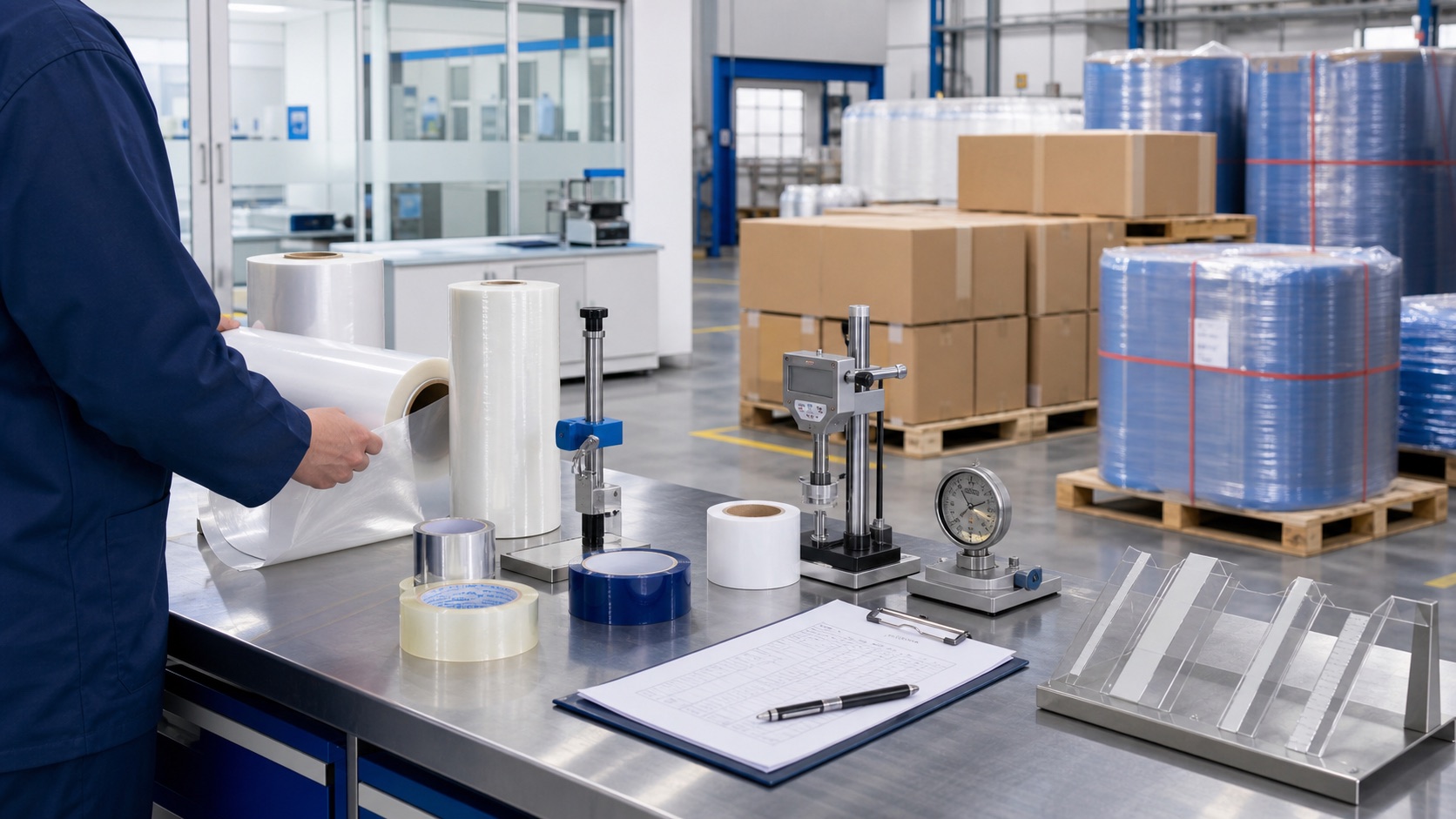
Temporary protection succeeds only when it protects the original finish and removes cleanly after the full process. The safest selection begins with the surface and exposure history.
Map the Surface
Identify material, coating, gloss, roughness, porosity and cure condition. Newly painted, textured or low-surface-energy materials can behave differently from standard laboratory panels.
Map the Process
- Application temperature and pressure
- Forming, cutting, transport or installation steps
- Indoor or outdoor exposure
- UV, humidity, heat and chemical contact
- Maximum dwell time before removal
Balance Adhesion and Removability
Too little adhesion can cause lifting; too much can create residue or surface change. Adhesion may increase during aging, so test both immediate handling and removal after the planned exposure.
Specify the Roll
Confirm film type, thickness, color or print, width, length, core, winding direction, perforation, edge quality and packing. Large rolls need protection against telescoping and crushed edges.
Approval Trial
Use production-representative panels and document surface batch, application, conditioning and removal. Keep an approved sample and define any visible acceptance criteria.