
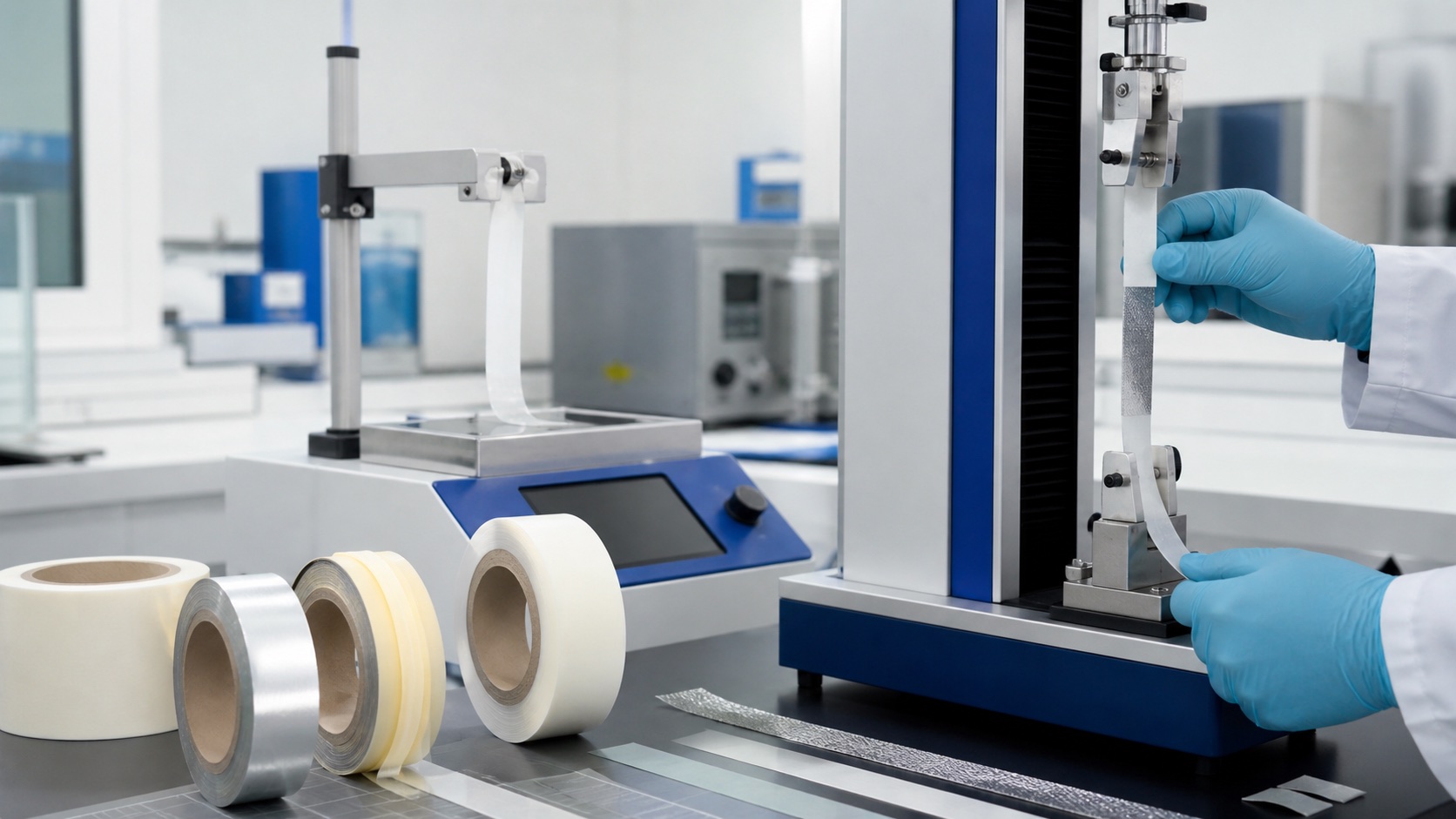
Illustration note: The header image is an AI-generated concept illustration. It is not a photograph of Haoxuan’s actual laboratory or evidence of product testing.
A protection-film trial needs a traceable surface sample, not only a finish name. Record which panel was tested, where it came from and how it relates to the intended production surface. Terms such as mirror, brushed and matte help begin the conversation, but they do not identify every surface condition relevant to the proposed film.
Haoxuan’s Stainless Steel Protection Film listing discusses mirror, brushed and matte finishes and asks buyers to review the application. Use the listing to identify a candidate. Do not treat those broad finish words as proof that one film construction is suitable for every panel described by the same word.
Give the substrate its own sample identifier
Use a code for the physical surface sample that is separate from the film sample code. Connect it to the panel supplier, product or finish reference, and the batch or project information available. If the source cannot be confirmed, record that limitation rather than assigning the sample the identity of the intended production material.
A piece found in a sample cupboard may be useful for an initial discussion, but it may not represent the panel being purchased. The record should explain whether it is production material, a supplier reference sample or a convenient substitute. Each has a different evidentiary boundary.
Separate the material name from the surface description
Record known substrate information and the documented finish separately. A stainless steel grade does not fully describe the surface condition, and an appearance term does not establish the underlying grade. Keep source statements attached to the appropriate field.
Where a coating, treatment or prior temporary covering is relevant, record what is known and ask the surface supplier for clarification. Do not guess a chemical treatment from appearance. The responsible parties should assess compatibility using information about the actual surface and proposed film rather than relying on a polished photograph.
Photograph the sample for identification
Use photographs to connect the physical piece with its label and visible condition. Include a reference view that makes it possible to distinguish the sample from others. Record the relevant viewing direction and lighting when appearance is part of the review, because photographs taken under different conditions may be difficult to compare.
A photograph can document visible features; it cannot establish all surface properties. Keep scratches, marks or other existing observations in the baseline so a later review does not automatically attribute them to the film. Do not alter or clean a sample merely to improve the photograph without recording the approved preparation.
Document the preparation history
Record the sample’s condition when received and any preparation carried out before the trial. Use instructions approved for the actual surface and film. If a preparation step is unknown, leave it unknown. An undocumented cleaning step can make it difficult to interpret why one sample behaves differently from another.
This article does not prescribe a cleaner, application pressure or removal technique. Those details depend on the materials and the responsible technical review. Avoid improvising a process that could affect a finish or create a safety problem simply to complete a purchasing worksheet.
Use a sample identity card
- Surface sample code and physical label location
- Source organization, product reference and supplied date
- Documented material and finish references
- Batch or project connection, where available
- Known coating, treatment or previous covering
- Received condition and baseline photograph references
- Preparation record and applicable instructions
- Relationship to the intended production surface
- Unknown fields and the person responsible for clarifying them
Keep this card with the film trial record. It does not need to contain unnecessary personal information or proprietary process details. Share the technical information the supplier needs to assess the proposed application through the authorized project channel.
Read a sample mismatch before approving the result
Consider a hypothetical buyer who tests film on a spare panel labeled “brushed” while the order concerns a different supplier’s brushed panels. An acceptable observation on the spare panel is evidence about that specimen and the recorded conditions. It does not establish the outcome on the ordered panels.
The practical next step is to identify the differences and ask whether a representative sample is required. Do not rewrite the spare panel’s label to match the order or omit its source from the summary. This example illustrates a traceability problem; it is not a claim about a completed Haoxuan trial.
Connect identity to the trial scope
Once the surface is identified, record the film construction, application and intended exposure or dwell period in the trial plan. The protection-film removal-trial guide covers the broader observation record. Surface identity is the foundation for interpreting those observations, rather than a substitute for the trial itself.
Keep the before-and-after evidence connected to both sample identifiers. If several films are evaluated on different areas, make the mapping clear without damaging the surface or departing from the approved procedure. A result with an uncertain sample mapping should remain inconclusive until the record can be resolved.
Decide which later changes need review
A different panel supplier, finish reference, coating or preparation method may change whether earlier evidence applies. Record the changed field and ask the responsible technical parties to review it. Do not assume that a purchase order using the same broad word “matte” preserves the tested surface.
Similarly, a change in film construction should have its own identity and review. Keep both the substrate and film histories so the next order can be compared with the actual accepted combination. This is more useful than a general note saying that protection film was previously approved.
Request a surface-specific assessment
Send Haoxuan the surface identity card, the intended protection task, proposed duration and relevant conditions. Include the requested film dimensions, quantity and destination, while keeping unconfirmed technical fields visible. Ask which further information or representative samples are needed before a configuration can be recommended.
An acceptable trial supports only its documented materials and conditions. It does not establish universal residue-free removal, outdoor service life or protection against every form of damage. Preserve those limits in the purchasing record so future teams know what was actually evaluated and what still requires a separate review.