
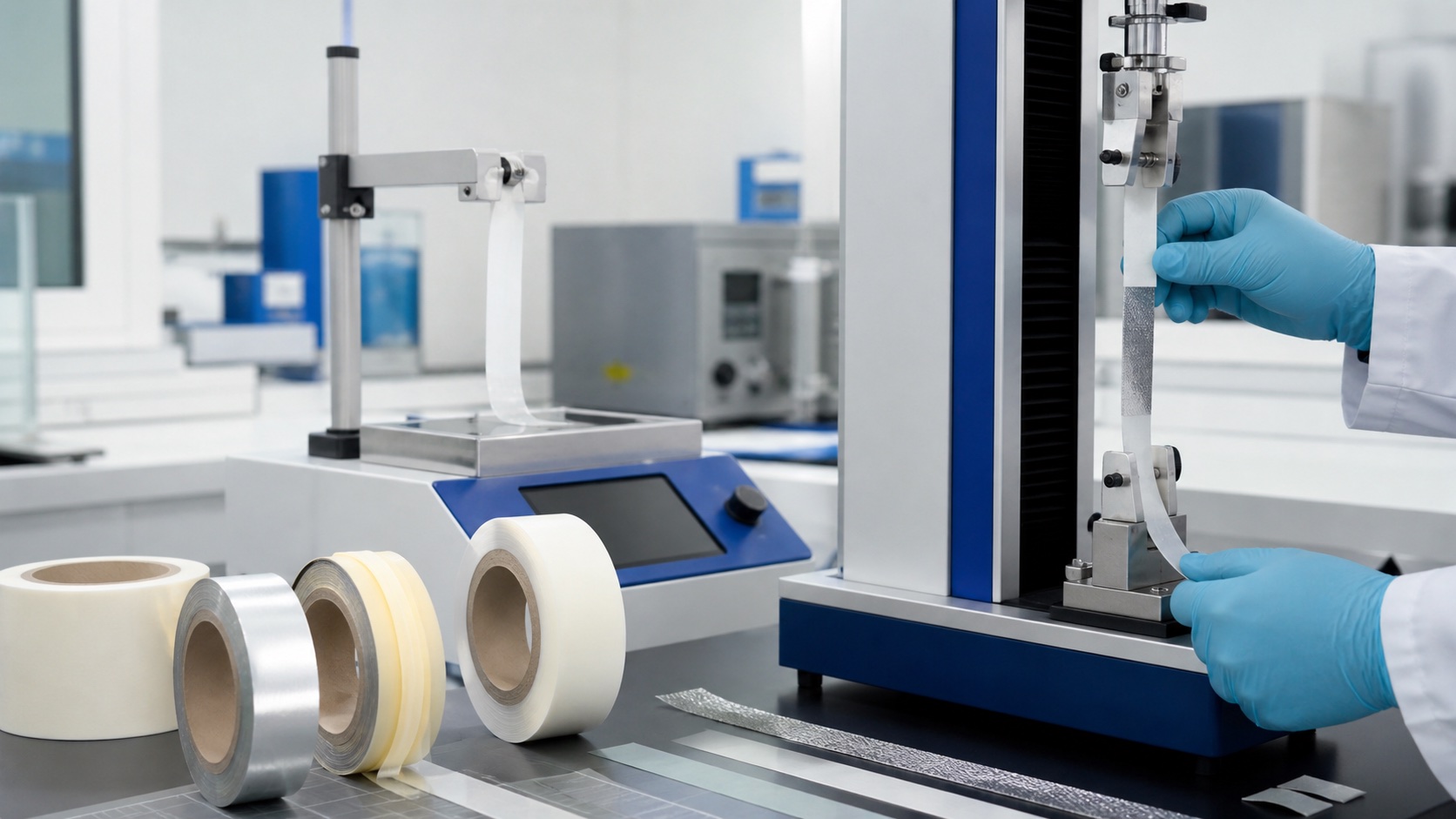
A deep-drawing protection film sample should remain traceable to the same part before forming, after forming and after film removal. Without that connection, purchasing may receive three attractive photographs that do not explain what happened to one material-and-process combination. Use a stage-linked record to separate the starting condition, the forming observation and the final surface review.
Haoxuan lists protection films for deep drawing for metal and plastic sheet forming and stamping. The listing provides product-category context, not a verified process envelope for a particular drawing. This guide does not specify draw ratios, temperatures, tooling settings or permissible deformation. Those decisions require the selected film documentation and the qualified process owner’s approval.
Give the blank and finished part a shared identity
Start with the part number, drawing revision and material specification used for the proposed evaluation. Link the flat blank reference to the formed-part reference, even if production uses different names for them. Record the sheet supplier, finish and relevant surface treatment. Where only a sample coupon is available, identify which aspects of the finished geometry it does not represent.
The link should survive movement between departments. A blank photographed by purchasing and a formed sample photographed by production must carry a consistent sample identifier in the record. Do not rely on memory or visual similarity to establish that connection. Keep the photograph filenames and the physical sample references together so a later technical discussion can follow the same piece.
Describe the approved process without prescribing it
Record the process route that the technical owner has authorized for the trial, including the relevant procedure or job reference. Identify the stages during which the proposed film is intended to remain on the part. If the process includes additional treatment, storage or transport between stages, show where those steps occur rather than compressing the whole route into “deep drawing.”
Ask the supplier to confirm whether the specific film construction can be reviewed for that route. A general statement about elasticity or resistance to processing conditions does not define an acceptable setting for the actual equipment. Do not change production parameters to suit an informal sample demonstration. Unresolved compatibility questions belong in the review record before the evaluation proceeds.
Record the starting surface before forming
Capture the blank’s visible condition and identify existing marks. Record which face is protected and which regions are uncovered. A coverage drawing is useful when edges, openings or local features matter to the final appearance. The starting record provides a reference for later observations; it should not imply that every visible feature was created by forming or by the film.
Identify the film sample, its supplier-confirmed construction and any available batch reference. Record the approved application procedure and actual conditions. Note visible wrinkles, lifting or other observations before the part enters the next stage. Do not merge results from different film versions under one generic product name, even when the films look similar.
Keep the after-forming view separate from removal
After the authorized forming stage, document the condition of the protected part before removing the film, where the approved procedure permits that inspection. Record visible displacement, tears, lifting or changes in coverage as observations. Use the part drawing to identify locations, rather than referring only to “the corner” when several corners have different geometry.
This stage cannot fully describe the underlying finish while it remains covered. An apparently intact film is not proof that the hidden surface is unchanged. Conversely, a visible film change does not by itself establish a cause or prove that the part is unacceptable. Record what can actually be observed and leave the technical interpretation to the agreed review.
Link removal to the same formed sample
When removal is authorized, record its timing, procedure reference and relevant conditions. Keep the sample identifier visible in the record. If the part waits between forming and removal, document that interval and its storage conditions. Otherwise, a later review may mistakenly compare an immediately stripped sample with one that experienced a different handling or storage route.
Review the exposed surface against the starting reference using comparable views. Describe residue, marks, gloss differences or other visible changes without immediately assigning responsibility. If an unexpected condition appears, stop the affected evaluation and seek technical guidance. Do not improvise cleaning or repair merely to produce a favorable final photograph.
Build a three-stage evidence register
- Before forming: blank identity, material and finish, film reference, coverage drawing, starting observations and images.
- After forming: same-part confirmation, approved process reference, actual deviations, visible film condition and location-specific images.
- After removal: removal reference, elapsed interval, exposed-surface observations, images and technical review decision.
Include a field for missing evidence at every stage. If the starting surface was not recorded, say so. If the sample changed identity during transfer, do not present the sequence as complete. An incomplete record can still support a specific question, but it should not become the basis for a broader claim than the available evidence allows.
Use differences to frame questions, not unsupported causes
A change first noticed after forming may deserve investigation, but the timing of an observation is not proof of its cause. The record helps the responsible parties locate the question: starting surface, application, forming, handling, storage or removal. Keep each possibility tied to the evidence instead of automatically blaming the adhesive or declaring the process unsuitable.
If two samples followed different routes, describe the differences before comparing their appearance. A useful comparison controls the decision-critical variables or explicitly states where it cannot. This article does not claim that a particular film passes such an evaluation. It describes what a buyer should preserve so the technical team can make a defensible, application-specific assessment.
Separate trial approval from a production change
An accepted sample supports only the scope recorded in that evaluation. A changed sheet finish, drawing revision, film construction or process route can reopen the question. Identify the review owner and the change conditions in the purchase documentation. Do not let a familiar product name silently carry approval from a flat sample to a different formed component.
For a preliminary drawing, mark unconfirmed features clearly and ask which additional information is needed before a sample plan can be agreed. Commercial questions such as quantity, packaging and destination can proceed in parallel, but they do not resolve technical feasibility. Keep the two decisions visible instead of treating a quotation as process approval.
Request a part-linked film review
Send Haoxuan the blank and formed-part references, actual surface description, proposed film coverage and authorized process outline. Include your three-stage evidence register and ask for a construction-specific review. The existing protection-film removal record can support the final stage, while this handoff record keeps that result connected to the same part’s earlier history.